
Analostan Island Once Mystery Tract
Occupied by Family From Abroad, Which Kept From People, and Became Subject of Much Speculation—Dramatic Event Accompanied by Tragic Incident, but Followed by Settling of Old-World Quarrel—Story of the Masons of Gunston.
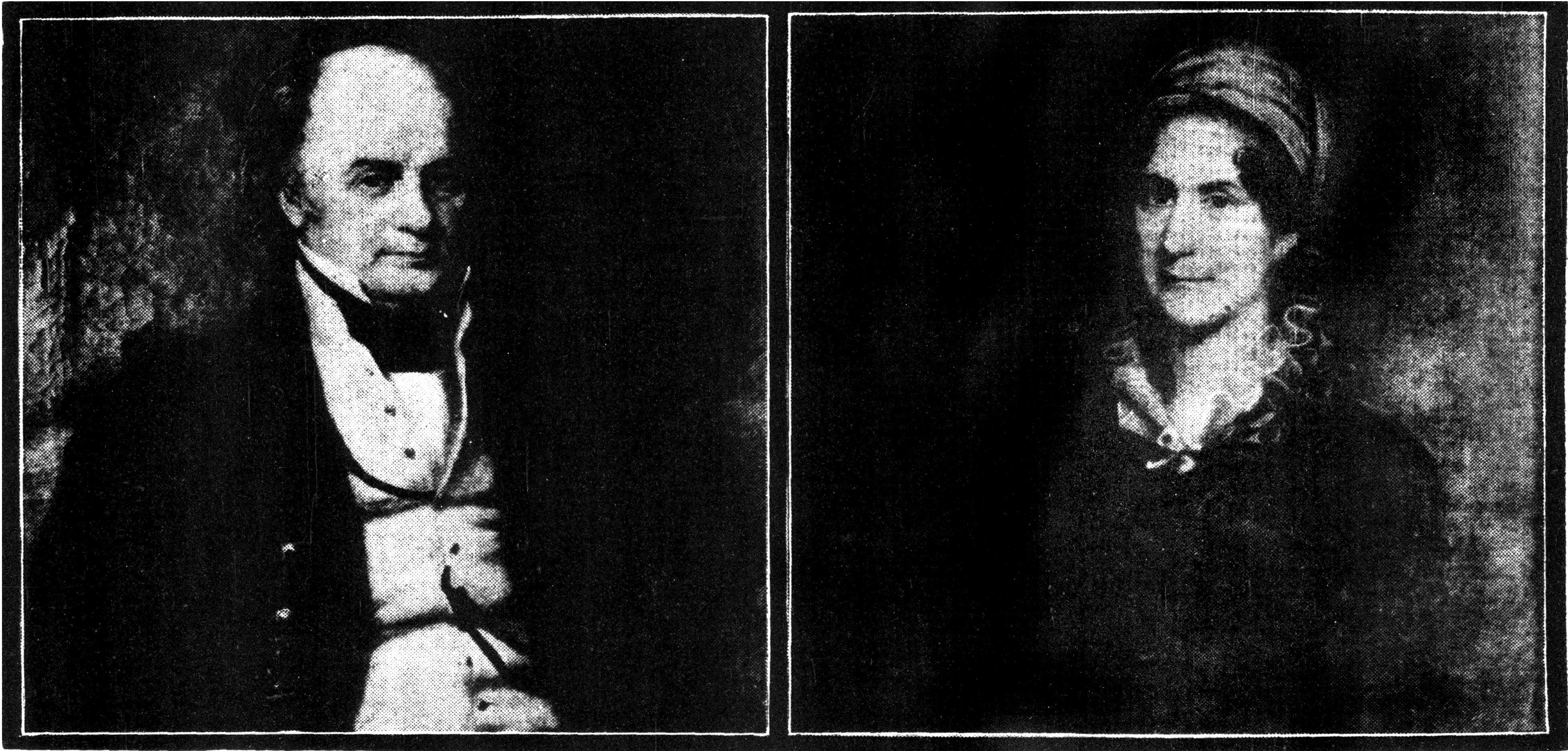
Anna Maria (Murray) Mason, wife of Gen. John Mason.
By John Clagett Proctor
Lying close to the Virginia shore, but still within the boundaries of the District of Columbia, is Analostan Island, which is known to so few people nowadays, but which in past years—and especially in the early days of Washington—was one of the most attractive and beautiful spots in the Federal territory. Indeed, Analostan or Mason's Island—by both of which names it is equally well known—existed as a well known estate years before the City of Washington was laid out, being the property of George Mason of Gunston Hall.
Though apparently merged with the Virginia side of the Potomac, yet it is easily discernible as one passes across the Key Bridge, from which it is not far distant to the east, and though having the appearance of being somewhat flat in its topography, yet it is deceptive, for it has at some places an elevation of more than 60 feet.
George Mason of Gunston Hall was the fourth of that name in a direct line in this country. The first George was born in England and died in Virginia in 1686. George of Gunston inherited considerable land from his father, as the latter had also inherited from his forebears. Consequently, the fourth George, when he had arrived at the age of 21, found himself one of the richest men in Colonial Virginia, his estates even extending into Maryland, where his father died in Charles County in 1735.
Just how the fourth George Mason became possessed of Analostan Island, the writer is unable to say, for the authorities seem to differ as to the dates and method of obtaining title, but he feels it was by purchase and not by grant.
Kate Mason Rowland, in her work entitled “The Life of George Mason” has this to say on the subject:
“In 1748, a ferry was established ‘from the plantation of George Mason, opposite to Rock Creek over to Maryland.’ And this ferry accross the Potomac has an historic interest. Rock Creek runs between Georgetown and Washington, and the land opposite in Virginia was a tract patented by George Mason's father, and lies a short distance above ‘Arlington.’ Near here, in 1738, a ferry had been established across the Potomac on the land of Francis Awbrey, and it was now removed to George Mason's place, about half a mile higher up the river.
“About this time it may have been that George Mason obtained by patent from Lord Baltimore the island opposite Rock Creek, called Analostan or Mason's Island, though it was called at one time, as we learn by George Mason's will, Barbadoes. The island and ferry both came later to one of George Mason's sons. And for more than a century the ferry continued in existence, to be replaced at length by a toll bridge. Finally, in April, 1888, a free bridge was inaugurated at this point, and for the first time in a century and a half the traveler could cross the Potomac at Rock Creek without paying toll or fee.”
From this it would seem, that George Mason of Gunston inherited Analostan Island from the estate of his father, who died in 1735, but, as a matter of fact, as will hereinafter be shown, he obtained it by deed made direct to him.
In 1907, Hugh Taggart, one of the foremost barristers and the late father of the talented lady—Miss Etta L. Taggart—who was elected to the City Council, wrote a paper for the Columbia Historical Society on “Old Georgetown,” in which he said, in speaking of Analostan Island: “It passed into the possession of George Mason by a deed from Francis Hammersley dated August 28, 1777, hence the name Mason's Island.”
Those who recall Mr. Taggart and his ability as a lawyer and historian, especially on matters relating to Georgetown, will appreciate the weight of his statement and will conclude that the island did not come into George Mason's possession until the year 1777. Indeed, Mr. Taggart's whole statement is so interesting that the writer feels it will bear quoting, as follows:
“I have in my possession a map showing the Potomac River and its tributary streams, prepared by Moll, a London geographer, and, although it bears no date, there is reason to believe that it made its appearance early in the first half of the eighteenth century. * * * Two islands appear on this map in Turkey Buzzard Run, just above its confluence with the Anacostia. They are called the ‘Anacostian Islands’ one of these we have no difficulty in recognizing as the present Analostan or Mason's Island, and the other as the island which formerly existed at the Virginia end of the Long Bridge, called at one time ‘Holmes’ Island and later ‘Alexander's Island.’
“In this connection I may add that several years ago I saw in the clerk's office of Fairfax County Court a plat which it is probable had been prepared prior to the Revolutionary War with the object of enlightening the court as to the pretensions of the parties to an ejectment suit, and which showed a profile of the river on the Virginia side from a point below the Four Mile Run as far up as the present Aqueduct Bridge. Upon the map the two islands are delineated. The lower one bears the name of Holmes Island and the one above it, viz., Analostan or Masons Island, bears the name of My Lord's Island. Whether the latter took this name from My Lord Baltimore, the owner under the patent for Maryland of the land on this side of the river, or from My Lord Fairfax, the owner under the patent for the northern neck of Virginia of the land on the other side, might be made the subject of a curlous historical controversy involving the ancient, long continued and but recently settled dispute between Maryland and Virginia as to the boundary line between them on the Potomac.
“The records of the Virginia land office show that as early as the year 1669 the island was so known. On October 21 of that year a patent was issued to Robert Howsing (Howson), for a tract of 6,000 acres described as lying ‘in the freshes’ of the Potomac River and as having for its beginning a red oak standing by a small branch or run nearly opposite an island ‘commonly called and known by the name of My Lord's Island.
Analostan Island obtained still another viz. Barbadoes, through a survey made of it by the Colonial authorities of Maryland for Capt. Randolph Brandt on the 29th day of April, 1682, and through the patent granted to him for it by Lord Baltimore. It is described in the certificate of survey and patent as ‘an island lying in the Potomac River over against Rock Creek, in Charles County, commonly called or known by the name of Analostian Island, containing by estimation 75 acres. To be held of Zachiah Manor, called Barbadoes.’
“On the rent rolls of Lord Baltimore the tract is carried as Barbadoes and is described as an isiand commonly called Anacostian Island; from which it appears that in early days it went indifferently by either name, Analostian or Anacostian.&rrdquo;
In the District of Columbia—as elsewhere, of course—there are many beautiful legends relating to certain tracts of land, for instance, the one relating to the Treaty Oak on Temple Heights, for which there seems to be no foundation in fact, and so, in looking up the history of Analostan Island, we find it, too, has a lovely little legend well worth repeating, which naturally has its setting at a time many years before it was owned by the Mason family. It will be here given as it appeared in print 50 years ago:
“Towards the close of the last century there arrived in Georgetown, per schooner ‘Albatross,’ from Liverpool, an English gentleman, accompanied by his wife and two daughters. He was unknown here, and from his reticent manner it was evident he did not care about forming new acquaintances. Arrivals from abroad were not as frequent then as now, and people of an inquisitive nature were considerably disappointed at not being able to learn something of his history.
“To be sure, there were his name and residence registered at the hotel—‘Marvin Strathmore and family, London, England’—but that was not sufficient; they wanted to know all about him, and how to get this information was the subject of daily conversation.
“About a month after his arrival he purchased the property now known as Analostan Island, and during the six months that followed it was the scene of wonderful transformations. Vessels were dispatched for lumber, upon the arrival of which building commenced at once. Men were put to work clearing the wild growth of timber, laying out walks and drives, digging a well and cistern, making an ice house, a landing for boats, and such other improvements as the owner desired.
“The latter part of November Mr. Strathmore and family took possession of their beautiful home. The dwelling -- a two-story frame -- was situated in the center of the island, facing Georgetown. It contained 14 large rooms, quite a number of which were magnificently fitted up with furniture and works of art imported from England. Several outhouses were scattered about the premises; a large barn, unlike anything ever before seen in this part of the country, stood a few hundred yards in the rear of the main building, while directly in front of the dwelling, at the water's edge, was a fine boathouse.
“Of course, this sudden and seemingly extravagant expenditure of so much money was the topic of general comment. Some remarked with a very wise expression that there was something wrong, and when he gave orders to the carpenter to build a close board fence, 12 feet high, around the entire island, with only one gate near the boat landing, the majority of those who had been in doubt regarding his character decided at once that he was a criminal of some kind.
“Occasionally Mr. S., accompanied by some of his family, would drive in Virginia, but never this side of the river. That he was wealthy no one could contradict. His horses and yacht were the fastest in the country, and his retinue of servants (most of whom he sent to England for) superior to any ever introduced here; in fact, he seemed to possess everything heart could wish for, or, at least, that money could command.
“Judging from his appearance he was a man about 65 years of age, tall and well proportioned, with fine features, straight hair and full beard, slightly gray. His wife was probably not over 50; a handsome, matronly brunette, upon whom time and the cares of life evidently had rested lightly.
“Their youngest child, a girl of perhaps 15, a very pretty little blonde, seemed to be the pet of the family and a great favorite in the household. Eileen, the oldest daughter, 25 years of age, was, unquestionably, the most beautiful woman that had ever visited this part of our land. * * * * Everything that has been published in praise of such famous beauties as Helen of Troy, Zenobia or Cleopatra, would fail to portray all the loveliness and charms of this ‘Queen of the Isle,’ as the people in Georgetown called her. A poet, in after years, very truthfully described her:
“One who would change the worship of all climates, and make a new religion where'er she comes; unite the differing faiths of all the world, to idolize her face. Her form was fresher than the morning rose when the dew wets its leaves; unstain'd, and pure, as is the lily, or the mountain snow. Her eyes, her lips, her cheeks, her features, seem to be drawn by love's own hand. Grace was in all her steps, heav'n in her smile; in every gesture, dignity and love; in intellect, by far superior to us all. Venus, herself, might well have envied her, for she had charms no other woman e'er possess'd.’
“One evening in the early part of December a crowd of men were sitting in the little tavern in Georgetown awaiting the arrival of the Baltimore stage coach. As usual, their conversation was confined to the current subject -- the Strathmores. Each one in his turn had some startling piece of news as to what had transpired lately on the island. One man was relating what Mrs. So and So had heard from somebody's Negro, who was well acquainted with the man who helped build Mr. Strathmore's ferry boat. When the coach arrived there was but one passenger, a man not more than 30, of fair complexion, golden curly hair, heavy mustache, merry blue eyes with long dark lashes, exquisitely curved eyebrows, and in stature above the medium height, erect as an Indian, with every indication of herculean strength. The people stepped aside as he walked up to the register and wrote in a plain bold hand ‘Carlos Savoy, Twickenham Park, England.’
“After supper he remarked to the landlord:
“ ‘I understand a gentleman by the name of Strathmore has purchased property in your neighborhood; can you tell me where it is situated, and the nearest road by which I can reach it?’
“The landlord answered his question, delighted at the thought that at last he had met some one who could and would give him reliable information regarding the owner of the isle, but much to his disgust, Mr. Savoy, after thanking him, merely asked that he be called early, and went to his room. The following morning he proceeded to the island, where he remained until nearly dark. After the guests had all retired that night, he inquired of the landlord if he knew of any one who understood the Indian language, as spoken by a tribe called the Analostans, and upon being informed that he had a half breed in his employ who often acted as interpreter, Mr. Savoy continued:
“ ‘Can I see him tonight?’
“ ‘Sartinly you kin; I'll go and call him,’ and with that the proprietor bowed himself out of the door.
“Upon his return there came with him the half-breed, who, at Mr. Savoy's request, followed him to his room. What took place there during the two hours they were in conversation the landlord tried in vain to find out. All his servant would tell him was that the white man made him promise to keep his mouth closed for one week, and that if he did as he was told he would get ‘big money -- plenty gold.’ Before sunrise the next morning the interpreter and the stranger drove to the camp of the Analostans -- about a mile west of Georgetown, on the banks of the Potomac. Here they remained several hours, talking with the chief of the tribe.
“During the 10 days that followed, Mr. Savoy remained at the hotel, talking with no one and exhibiting no interest in anything or any person except the interpreter. In company with him he would drive to the Indian camp every night, often not returning until nearly daybreak. The afternoon of the eleventh day an Indian sauntered into the hotel and inquired for the half-breed, who, after a few words with him, took him to the Englishman's apartments.
“That night was one probably never forgotten by the old residents of Georgetown. Soon after dark a servant informed the landlord that Mr. Savoy wished to see him in his room. Upon entering he was requested to take a seat near the fireplace, while his guest, after locking the door, drew a chair close to his and in a low tone inquired: ‘Can you keep a secret?’
“ ‘I reckon I kin if I choose.’
“ ‘Suppose I was to loan you 100 pounds, without security, for an indefinite period, would that strengthen your resolution to keep my secret?’
“ ‘Wal, stranger, times is pretty hard just now, I think it would.’
“ ‘Promise me then, that you will, so far as lies in your power, do everything I ask tonight, and that what I am about to tell you shall not be spoken of by you for one month.’
“ ‘I swar,’ replied the landlord, clapping his right hand over his heart, and holding the left high in the air.
“ ‘Now,’ continued Mr. Savoy, ‘tell me first, is there a minister or priest between here and Alexandria, near the main road?’
“ ‘None that I knows of, 'cept the one to Falls Church, a leetle mor'n 5 miles outer your way.
“ ‘Very well. I want a carriage, the best you have, with two of your fastest horses, to meet me at precisely 11 o' clock tonight on the opposite side of the river, at the little blacksmith shop. Don't let the driver come a minute before the time; I will be there with a lady. I shall then drive to the church, and from there to Alexandria, where you can send for your team tomorrow. Can I depend upon you?’
“ ‘You sartinly kin, stranger, but you haint tole me that ar secret yet.’
“ ‘My good man, you have heard all the secret I care to tell you. See that you keep your word to me, and here is the proof that I will keep mine, and Mr. Savoy took from his valise the promised 100 pounds, and handed it to him.
At exactly 11 o'clock the carriage was at the blacksmith shop, and so were Eileen Strathmore and Carlos Savoy. They drove to the rector's house, near the old church, were married, and then proceeded to Alexandria, where a vessel was waiting to take them to Boston.
“Just before daylight the cry of fire was heard coming across the river, and the people on this side soon beheld a sight never before or since seen there. Every building and the fence were in a blaze. Boats were at once filled with strong, brave men, who, upon reaching the island, used every effort to extinguish the flames, but without success.
“From the half-breed it was learned that Mr. Savoy had employed an Indian to deliver a letter to Miss Eileen. He was to bring an answer, but he failed to return. A second messenger was sent by the chief, and he also never was seen again. A third was dispatched, and so until nine had gone, and none came back; when the chief himself found a way to deliver a note, and returned with a reply, unseen, in safety. They now had their revenge. Nine of their best warriors had been killed by, or through the orders of, Mr. Strathmore. To burn him out seemed to them their duty; and they did it. The family remained in Georgetown until the island was sold, when they returned to England.
“From Mr. Hartwood's diary,” it was found, “that several years before Mr. Strathmore came to this country his daughter Eileen was engaged to Mr. Savoy, the only son of a wealthy London banker. But a few weeks before the marriage was to have taken place, Mr. Strathmore became insane upon that one subject. His mania was that she should marry a member of the royal family or remain single. He would not listen to reason, and his physicians advised him to travel. This he did, pleased with the idea that he had broken off the engagement forever.
“The fire on the island, together with the loss of his beautiful daughter, seemed to have the effect of completely curing him; for in less than a year after his return home he advertised in every country for Mr. Savoy and his wife, promising to do everything in his power to make them happy if they would come back to London and remain during his life. They were only too glad to accept his invitation, and after their reunion a happier family could not have been found in all England.”
When George Mason died at Gunston Hall in 1792 he devised Arialostan Island to his son John, the item reading: “I also give and devise to my said son John Mason and his heirs forever, in like manner my island in Potomack River opposite the mouth of Rock Creek which I hold under a patent from the Lord Proprietor of Maryland by the name of Barbadoes.” In this connection it is quite evident that the testator was a strong believer in preparedness, for his will bears date of March 20, 1773, 19 years before his death.
It is really hard to imagine so good a scholar as George Mason making the misstatement that he obtained this particular piece of property “from the Lord Proprietor of Maryland,” when, as before said, we have the evidence of Mr. Taggart to prove that such was not the case. But fortunately, in addition to this, we have the statement of Miss Maud Burr-Morris, a very careful researcher, who gives us the successive ownership of the property down to William A. Bradley, who took title in 1851. The Masons, however, it is said, had quit the island long before this, due to the great swarms of mosquitoes which infested the place in the Summer season, and had moved back farther into Fairfax County. Here is Miss Morris' chain of title: “The deed for this property described it as ‘all that tract called Analostan Island, lying in the Potomac River opposite Georgetown, and originally patented by Charles Lord Baron of Baltimore to Randolph Brunett in 1682, for 75 years, and conveyed by Francis Hammersley to George Mason in 1777, and devised by him to his son, John Mason, and conveyed by Richard Smith, trustee, to John Carter in 1842. John Marbury, executor of John Carter, conveyed to Bradley.’”
The Bradley here mentioned was the eleventh Mayor of Washington, who died August 28, 1867.
Within the memory of many old residents there were a number of buildings at one time on Analostan Island, including the mansion house of John Mason, his outbuildings and slave quarters, and about every convenience a blue-blooded Virginian could wish for in antebellum days.
The owner was a man of considerable standing and prominence in the community. In 1793 he became an incorporator of the old Bank of Columbia, at first located at the northeast corner of Twenty-ninth and M streets, and 11 years later on the north side of M street between Wisconsin avenue and Thirty-fourth street. Later he served as president of this bank, succeeding Benjamin Stoddert when the latter became the first Secretary of the Navy in the cabinet of President John Adams.
In 1802 President Jefferson appointed him brigadier general of the militia of the District of Columbia, in which office he served until 1811, when he resigned. In 1815, when Henry Foxall decided to return to England to live, Gen. Mason purchased his iron foundry and operated it for awhile. He was also active in other directions, and at one time was a member of the firm of Fenwick, Mason & Co., merchants, Joseph Fenwick being in charge of the business at Bordeaux, France, and Mason managing the Georgetown house.
Just what part Gen. Mason played in the War of 1812 we do not know, but it is evident he believed, as so many did, in the Battle of Bladensburg that “he who fights and runs away, may live to fight another day,” for we find the President retiring “from the mortifying scene * * * on horseback, accompanied by Gen. Mason and Mr. Carroll.” We also find it stated that on the 24th of August, President Adams, Mr. Jones, then Secretary of the Navy; Gen. Mason of Analostan Island, Mr. Charles Carroll of Bellevue and Mr. Tench Ringgold took pains to view the burning of Washington at a safe distance.
Gen. Mason had a host of friends and admirers, and since he was fond of company, many were the gay parties held at his island home. Undoubtedly Gen. Washington stepped in to say a word when he was taking the ferry over the river, and Thomas Jefferson purposely stopped in occasionally to talk matters over. Another of the many distinguished visitors to come to the island, at a very early date, was Louis Philippe, who left France, his native country, when so many heads were being chopped off with guillotine, including in the number his own father, the Duke of Orleans, the richest man in Europe and chiefly noted for his reckless dissipation. Louis Philippe landed at Philadelphia after a most harrowing experience, evading those who relentlessly sought him for the sole purpose of decapitation.
This was four years before the seat of Government was moved to Washington, and limited to the extreme, indeed, were the accommodations in the Federal City for tourists, even though they might happen to be of royal Bourbon blood, as was the case with the duke, and so he stopped at the Union Tavern, then just completed, at Thirtieth and M streets northwest, but which was later destroyed by fire in 1832, and replaced by the present building in 1836.
This hotel was not far from Analostan Island, where the lovers of republican institutions could always find a cordial welcome from the son of that noted American who wrote the bill of rights and other historic documents previously mentioned by the writer, and who most likely assisted in providing funds with which to carry the distinguished visitor on his way, since while in this country he at times was almost compelled to live on charity, though his father's estate, valued at $100,000,000, was soon afterward restored to him upon his return to France.
It is indeed unfortunate that our lower-grade school histories do not deal more in the intimate and human side of such men as was this worthy monarch, who, on August 9, 1830, ascended the throne as Louis Philippe I, King of the French, and who served that country with marked distinction until deposed by the Revolution of 1848.
Like many of the lives of our own great men, the character of Louis Philippe might well be taken as worthy of emulation. Born of a father of boundless wealth, who embraced the infidel philosophy, he, however, had the good fortune of having a mother noted for her piety and virtues and who secured for him as tutor the celebrated Mme. de Genlis, whose teaching, if religiously followed today, especially in the primary instruction of our youths, would unquestionably produce results.
Gen. Mason married Anna Maria Murray, daughter of Dr. James Murray of Annapolis, Md., by whom he had a number of children, of whom James Murray Mason and Jobn Mason were the best known locally. He also had a daughter, Maria, who married Gen. Samuel Cooper, and whose daughter, Virginia Maria Cooper, married Nicholas Dawson of Leesburg, Va., and the pictures of Gen. and Mrs. John Mason are published through the courtesy of Mr. Cooper Dawson, son of Nicholas Dawson. James Murray Mason is historically known as a Senator from Virginia and as having been selected by Jefferson Davis, together with John Slidell, as commissioners to England and France in the interest of the Southern Confederacy, and as having been the medium of a stupendous blunder made by Capt. Wilkes, U. S. N., in taking them off the English vessel Trent, for which the United States soon found it convenient to offer an apology to the offended country and to release the prisoners.
Though James M. Mason was born on Analostan Island in 1797 and lived there for a number of years, it is quite likely that he never held title to it. He died at Clarens, near Alexandria, Va., April 28, 1871, and, singularly enough, Slidell died the same year.
John Mason, jr., the other son, must have been an unusually popular man, for, as a member of Potomac Lodge, F. A. A. M., in December, 1841, he was taken from the floor and made grand master of Masons of the District of Columbia, being one of only three persons thus elevated in the history of the local craft. Before the Civil War he was the captain of the Potomac Dragoons, a local military organization.
He married the daughter of Gen. Alexander Macomb and for a while resided at Evermay, on the Heights of Georgetown. In Washington he resided at different times on the north side of Pennsylvania avenue between Twenty-fourth and Twenty-fifth streets and at the corner of Twelfth and G streets. He died in 1859 and is buried in Christ Church Cemetery, Alexandria, Va.
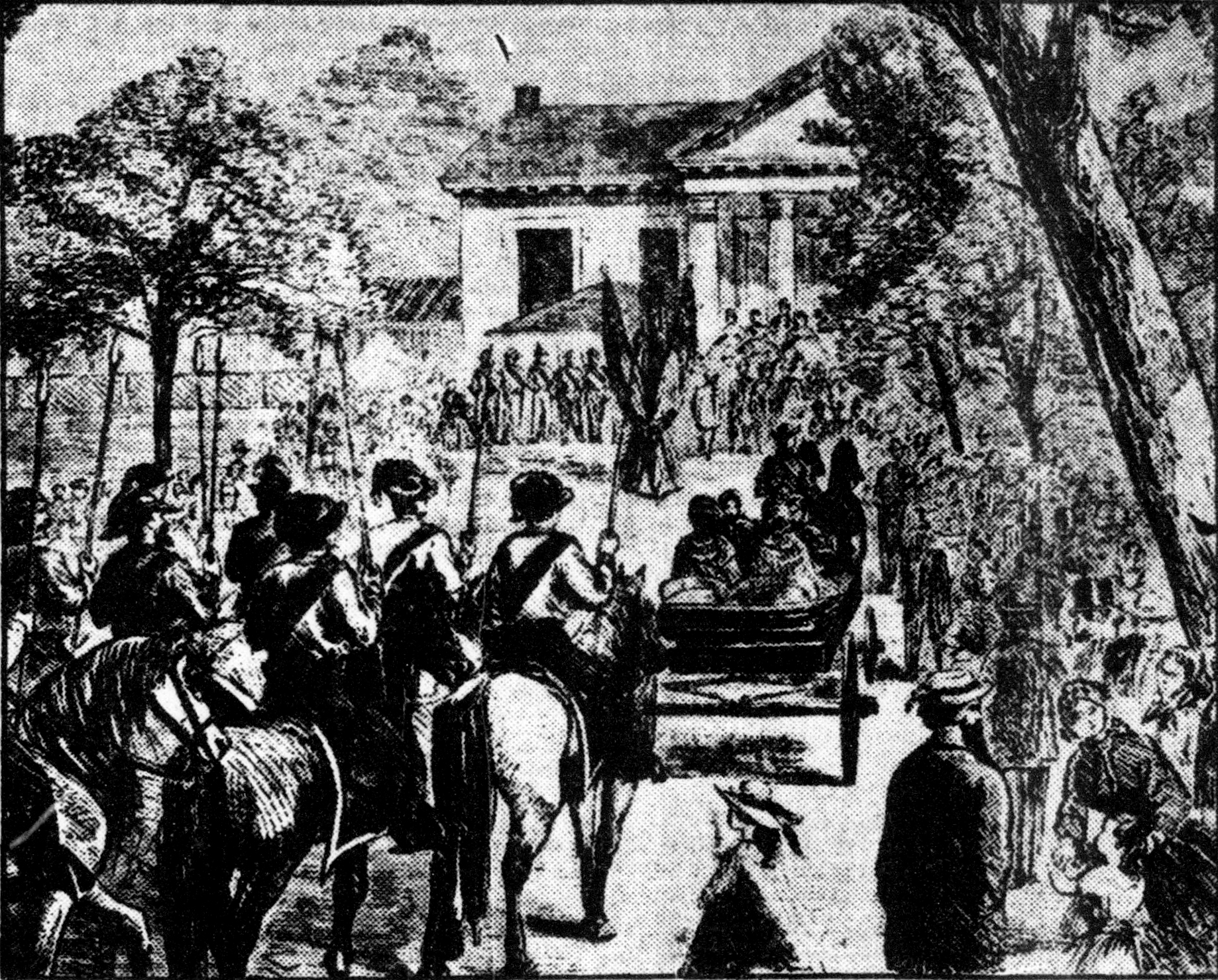
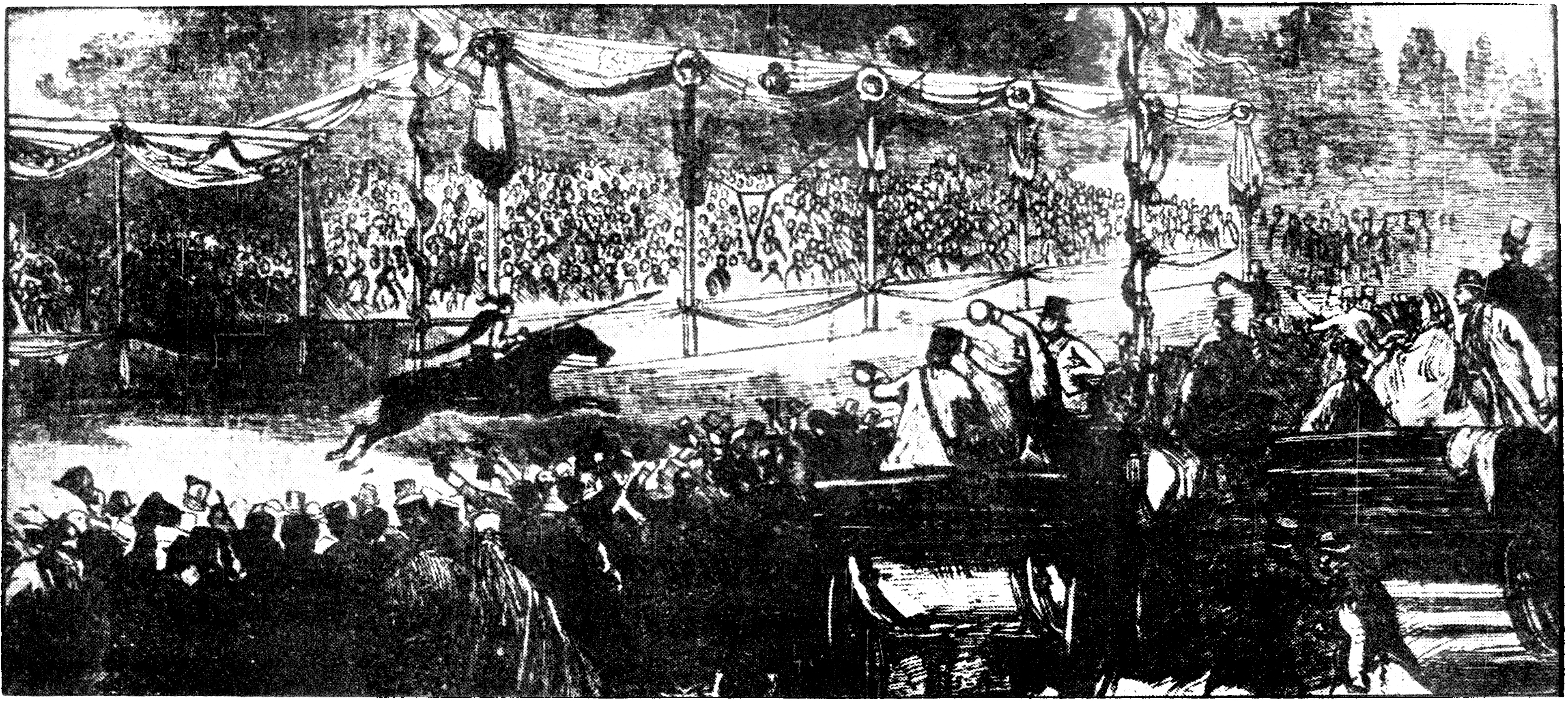
Toward the close of the Civil War Analostan Island was turned into a pleasure resort, where fairs, picnics and the like were held. And here took place one of the first tournaments ever held in this vicinity, a form of amusement still popular in certain sections.
In more recent years a boat club had its quarters here until a flood washed away the wharf and fire destroyed the house. All its beauty and attractiveness have gone—its charm has vanished and only the dream of the Poet Paulding offers consolation for its present abandoned and unattractive appearance, for we really did once know it as he tells us in his beautiful lines:
On either side, and all around, The weltering wave is seen to flow, Noiseless, or, if you hear a song, 'Tis but a murmur, soft and low.
The great trees, nodding to and fro In stately conclaves not a few, Whisper as secretly and slow As bashful lovers ever do.
The tinkling bell, the plashing oar, The buzzing of the insect throng. The laugh that echoes from the shore, The unseen thrush's vesper song—
And when I count the earthly hours That I shall cherish most of all, That walk in Analostan's bowers Will be the first that I recall.